


How Do You Choose The Right Attar For Your Skin Type, and Does It Really Last?
The short answer: yes, attar absolutely lasts — but only when it's applied to the right pulse points on the right skin type. Dry skin needs more, oily skin holds it longer, and knowing your base notes is what separates a two-hour fade from an all-day sillage.
First, what even is an attar?
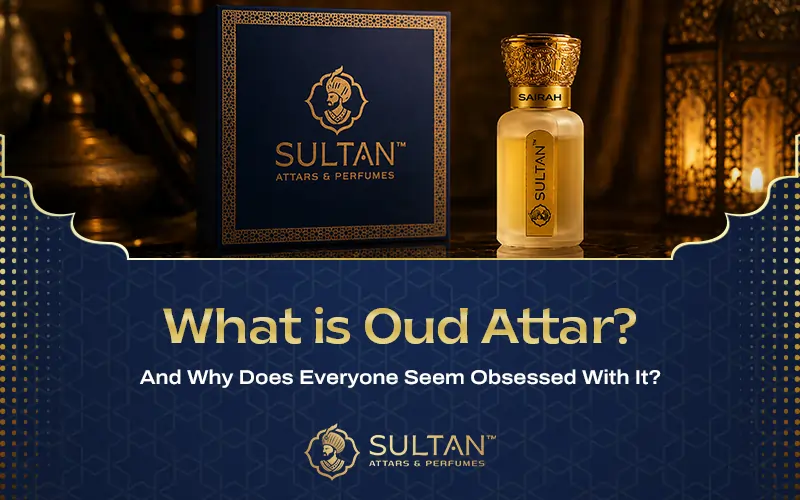
If you've grown up in a South Asian or Middle Eastern household, you already know the quiet ritual — a tiny bottle, a glass dropper, and a fragrance that seems to carry an entire garden inside it. For everyone else: attar (also spelled ittar) is a natural perfume oil, traditionally steam-distilled from flowers, herbs, spices, or woods directly into a sandalwood base. No alcohol. No synthetics. Just botanicals and time.
What makes them genuinely different from your average cologne or EDP is the concentration. Attars are pure perfume oils — there's no dilution happening. A single drop on your wrist can do what three sprays of a department-store fragrance can't. That's not marketing. That's chemistry.
The skin type question everyone asks, but no one answers honestly
Here's what I've seen after years of working with attar — the single biggest reason someone swears an attar "didn't last" is that they applied it the same way they'd apply a spray cologne. Rub the wrist together? That breaks the top notes immediately, and you're left with a flat, muted base. Don't do that.
Now, skin type genuinely matters:
Dry skin — The oil absorbs quickly, which means you'll want to layer a little. Apply an unscented moisturiser first, let it absorb for 60 seconds, then dab your attar on top. The moisturiser acts as a holding layer. Two small drops become a four-to-six-hour experience instead of two.
Oily or combination skin — You're actually at an advantage here. The natural sebum on your skin works as a fixative — attars last noticeably longer on you. One drop on each inner wrist and the hollow of your throat is often enough. If you find it's overwhelming in warm weather, stick to the wrists only.
Sensitive skin — Always do a patch test. Attars are natural, but "natural" doesn't automatically mean "non-reactive." Rose, jasmine, and sandalwood are among the gentler options. Spice-heavy or musk-heavy blends need a 24-hour patch check before you commit to the throat or chest.
"An attar doesn't announce itself the way an alcohol-based perfume does. It reveals itself — slowly, warmly, the way a good conversation unfolds."
Choosing by season, not just mood
This is the part most people skip and then wonder why their Oud feels suffocating in July, or their rose attar disappears in winter. Fragrance behaves differently with temperature.
In warmer months — or if you're in a humid climate — go lighter. Florals like rose, kewra, or champa feel fresh without being cloying. Green, grassy notes (like vetiver, or khus) are exceptionally suited to heat — they have a natural cooling quality that's been used in Indian summers for centuries for a reason.
In winter or cooler weather, the heavier base notes shine. Oud, amber, musk, and sandalwood-dominant blends need warmth to bloom fully. They'll feel balanced and rich in the cold in a way they simply can't in peak summer.
The notes framework, simplified
You don't need to become a perfumer, but understanding the basics saves you from buyer's remorse:
Top notes are what you smell in the first 10–15 minutes. They're bright, often citrusy or herbal. They fade.
Heart notes are the personality of the attar — florals, spices, green accords. This is what the attar is really about.
Base notes are what stay. Sandalwood, oud, musks, amber. These are what you'll smell on your shirt the next morning. When someone says an attar "lasted all day," they're talking about the base.
When you're shopping, pay attention to what the base is built on. A good sandalwood base is smooth and skin-like. A synthetic base will smell sharp or plastic-y after an hour. If you're buying from a reputable attar house, they'll tell you exactly what the base is — and they should.
A quick word on the application
Pulse points — wrists, inner elbows, throat, behind the ears, even the hair — are warm, which helps diffuse the fragrance outward. Don't rub. Just dab, press gently, or roll the bottle stopper directly on skin. Let it dry down naturally for 20–30 minutes before you make any judgments about how it smells on you. Attar is a conversation, not an announcement.
Before you buy your next attar, remember.
Dry skin absorbs faster — moisturise before applying and use slightly more than you think you need. Oily skin holds attar longer, so start with less.
Season matters as much as preference. Florals and green notes for warmth and humidity; oud, amber, and musk for cooler weather.
Never rub your wrists together. Dab, press, and leave it alone — rubbing kills the top notes and flattens the whole experience.
The base note is what lasts. Always ask what an attar is based on — good sandalwood or oud is the difference between an all-day fragrance and a two-hour one.
Give it time. Don't judge an attar in the first five minutes. Let it dry down for at least 20–30 minutes on your skin before deciding if it's the one.
Ready to find your signature summer scents?
Our summer edit is handpicked for warm weather wear — rose, khus, kewra, and more. For a limited time, shop the collection at our best prices of the year.
No alcohol. No synthetics. Just pure attar, priced for the season.